.png?w=1555&h=1555)
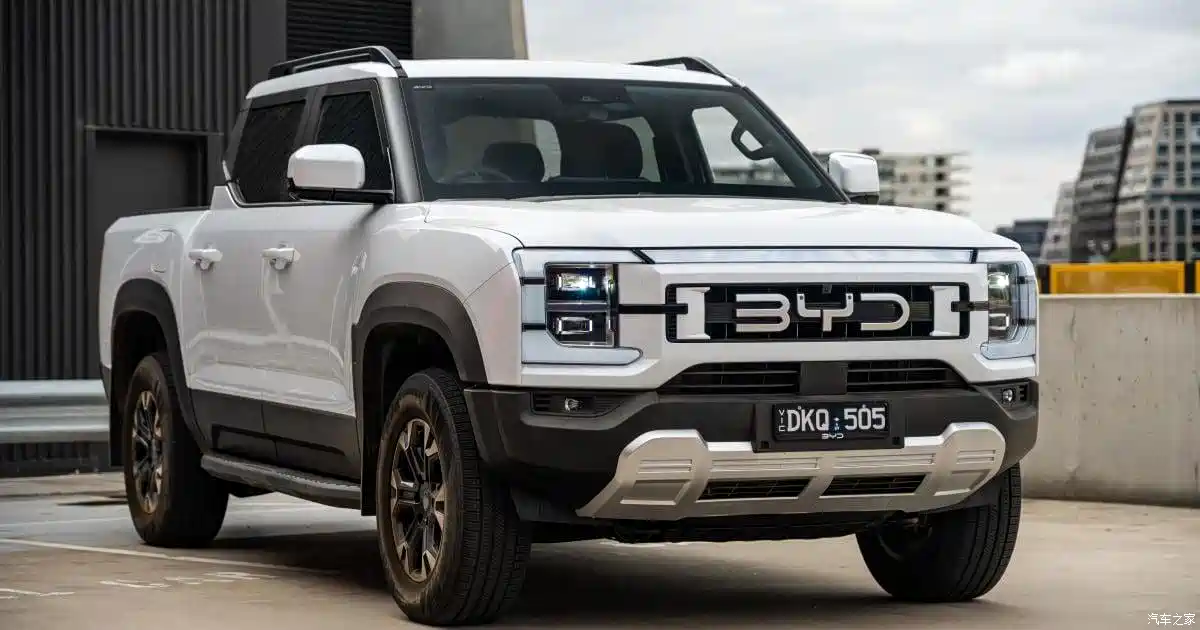
According to data from the Federal Chamber of Automotive Industries (FCAI) in Australia, for the first time in February this year, China became the largest source of vehicle imports to Australia, ending Japan's long‑standing lead that had lasted since 1998.
Chinese automakers are making rapid strides in overseas markets, now accounting for a quarter of the Australian market.
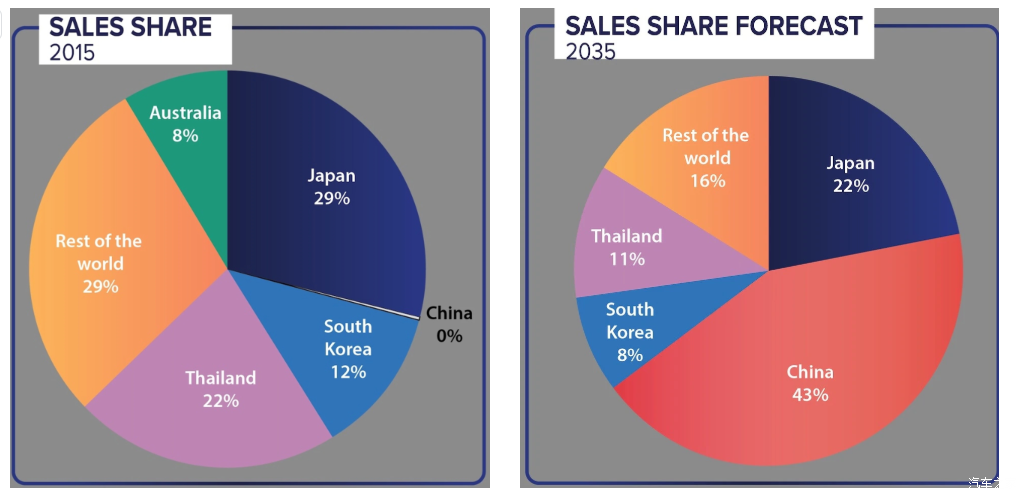
In February, Australian consumers bought 22,300 vehicles made in China, representing a market share of about 25%. They were followed by Japan with 21,600 vehicles and Thailand with 19,400. It is projected that by 2035, China's market share will further expand to 43% – a remarkable rise from just 10 years ago when the share was 0%, and the Australian market was dominated by Japanese and Korean brands.
In the first two months of 2026, the top three vehicle brands in Australia by sales were Toyota, Mazda and Kia. Among them, Toyota saw sales fall 24.9% year‑on‑year to 27,900 units, Mazda dropped 13.9% to 14,700 units, while only Kia posted a 7% increase to 13,300 units.
Chinese automakers enjoy clear cost advantages
Compared with automakers from other countries, Chinese carmakers have seen their production costs decline over the past decade, giving them a major edge in capturing global market share.
Four Chinese brands among Australia's top 10 sellers, BYD leads
BYD, Great Wall Motor (GWM), Chery and MG have all entered the top 10 sales rankings in Australia. Among them, BYD ranks first among Chinese brands, with sales surging 160% year‑on‑year to 10,200 units; GWM and Chery posted sales increases of 27% and 99%, respectively.
Australia's car market is mid‑sized, with relatively low entry barriers
Annual vehicle sales in Australia exceed one million units, making it a medium‑sized market. However, Australia has virtually no large‑scale domestic auto industry, and vehicle consumption relies heavily on imports – which means the market entry threshold is relatively low. With substantial volume and no significant barriers, Australia has become a key battleground for international brands.
The FCAI notes that since 2020, ten new vehicle brands have entered the Australian market, nine of which are from China – including BYD, Geely Auto, XPeng, Leapmotor and Zeekr. GWM was the first Chinese automaker to enter the Australian market, doing so in 2009.
Since 2020, sales of Chinese‑made vehicles in Australia have climbed steadily. In 2023, China surpassed South Korea to become Australia's third‑largest source of vehicle imports; in 2025, it overtook Thailand to become the second‑largest. In 2026, China has already achieved the top monthly position in the first month, and is expected to lead for the full year.
"Made in China" does not equal "Chinese brand"
It is worth noting that "made in China" does not necessarily mean "Chinese brand". In the electric vehicle era, China has become a core manufacturing base for several multinational automakers. Tesla, BMW, Kia and others all produce vehicles in China and export them to Australia.
According to local Australian media, Chinese auto brands held less than 5% of the Australian market in 2020; by 2025, that figure had risen to around 20%.
Australian consumers favour SUVs and pickup trucks, and Chinese automakers are able to offer cost‑effective SUVs while also holding advantages in smart technology and electrification – which explains their rapid rise in this market.
Chinese automakers are a key driver of Australia's new energy vehicle market
FCAI data show that in 2025, sales of battery electric vehicles (BEVs) in Australia reached 103,000 units, up 13.1% year‑on‑year; plug‑in hybrid electric vehicle (PHEV) sales reached 53,000 units, up 130%.
Tesla's once‑dominant position in Australia's BEV market is under serious challenge
Specifically, data from Australian media CarExpert show that in 2025, although Tesla remained a top player in the BEV market, its sales fell 24.8% year‑on‑year to 28,000 units, while BYD's sales surged 77.3% to 25,000 units. In some months of 2025, BYD overtook Tesla to break into the top 10 overall new vehicle sales chart.
BYD is already a leader in Australia's PHEV market
According to CarExpert, BYD sold 27,000 PHEVs in Australia in 2025, capturing a 50% market share. The next closest was Japan's Mitsubishi, with just 10%. Overall, BYD sold 52,400 vehicles in Australia in 2025, a 156% increase year‑on‑year. The chart below, released by CarExpert, shows that in March of this year, BYD had already entered the top three best‑selling brands, with GWM, Chery and MG also on the list.
GWM is another Chinese automaker to enter the "50,000 club"
In 2025, GWM sold 52,800 vehicles in Australia, up 23.4% year‑on‑year. Unlike BYD, GWM has not bet entirely on new energy vehicles. Its best‑selling model in Australia is the Haval Jolion, a small SUV available in petrol and hybrid versions, which sold nearly 20,000 units annually. In addition, the GWM Cannon pickup sold over 10,000 units per year.