.png?w=1555&h=1555)
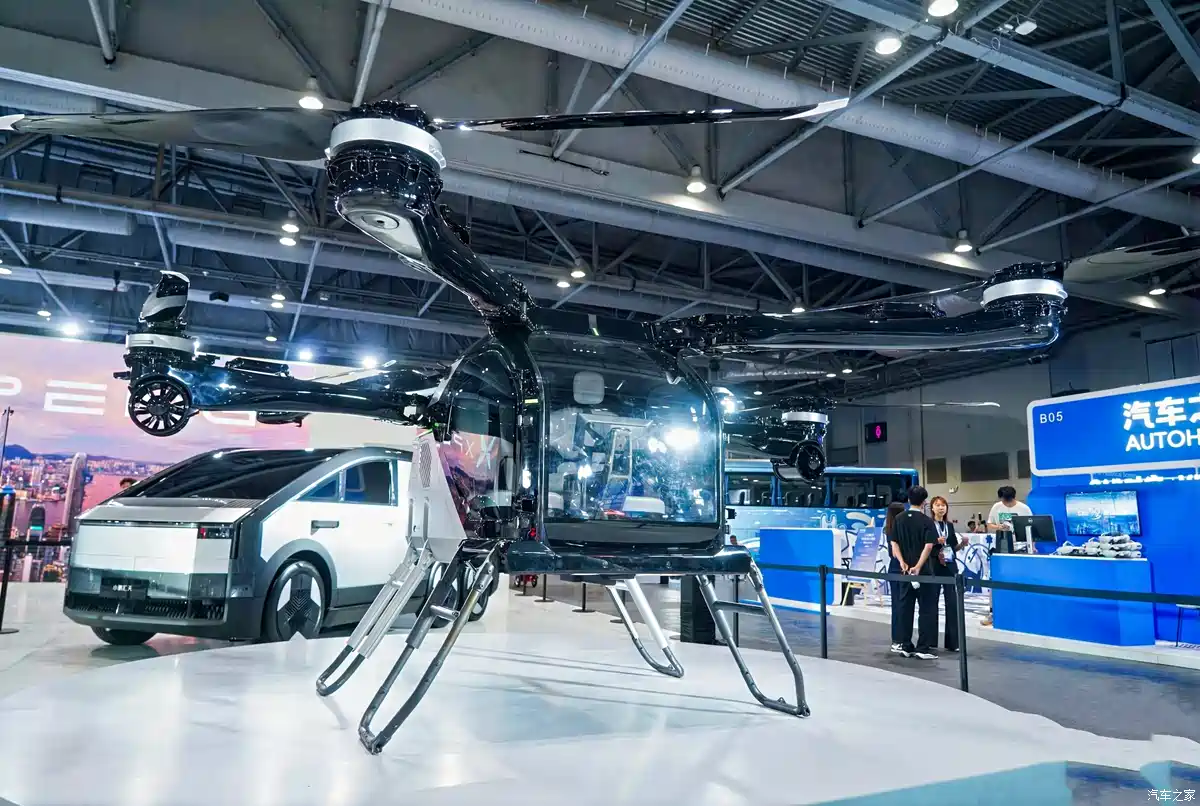
At the GITEX 2025 exhibition in Dubai, which opened on October 13th, Xpeng Huitian secured the first batch of 600 flying car orders in the Middle East, setting a record for the largest single overseas bulk order in the field. This brings the global cumulative orders for Xpeng Huitian's "Land Aircraft Carrier" to over 7,000 units.
Whether it's the single order of 600 units or the total of 7,000 units, Xpeng Huitian's "Land Aircraft Carrier" has set a new milestone in the history of flying cars worldwide.
If the airworthiness certification process proceeds smoothly, this modular flying car is set to hit the market in the first half of 2026. Could the era of flying cars truly be upon us?
How Big Is the Potential for Flying Cars?
What exactly is a flying car? In the narrowest sense, it refers to eVTOLs (electric vertical take-off and landing aircraft). Broadly speaking, it encompasses all vehicles that transition from two-dimensional ground transportation to three-dimensional low-altitude travel. Simply put, any vehicle that can both drive on roads and fly in the air qualifies.
During the 2024 Zhuhai Airshow, a group of tourists experienced the value of flying cars firsthand. A route that would take over two hours by car took just about 30 minutes by flying car.
Currently, the global eVTOL market is experiencing rapid growth, with its scale reaching $12 billion in 2024 and a compound annual growth rate exceeding 35%.
China's market performance is particularly impressive. In 2024, the scale of China's low-altitude economy already exceeded ¥500 billion, with eVTOLs, as the core of this economy, growing rapidly. According to predictions from the Civil Aviation Administration of China, the country's low-altitude economy is expected to reach ¥1.5 trillion by 2025 and could surpass ¥3.5 trillion by 2035.
So, what does the low-altitude economy include?
It primarily encompasses drones, flying cars, helicopters, small fixed-wing aircraft, and more, applied across various scenarios such as municipal management, consumer use, transportation, logistics, and agricultural operations.
Helicopters and small fixed-wing aircraft are mature products developed over decades, with limited room for future growth. The main drivers of future development will likely be drones and flying cars.
In 2024, Chinese drones accounted for over 70% of global sales, establishing China as a major producer and exporter in the global drone market.
With Xpeng Huitian securing the world's largest order of 600 units, Chinese companies are poised to become a dominant force in the flying car sector.
The industry anticipates that 2026, the planned launch year for Xpeng Huitian's "Land Aircraft Carrier," will also mark the "first year" of the eVTOL market's explosive growth.
Where Lie the Main Challenges?
The history of flying cars spans over 100 years.
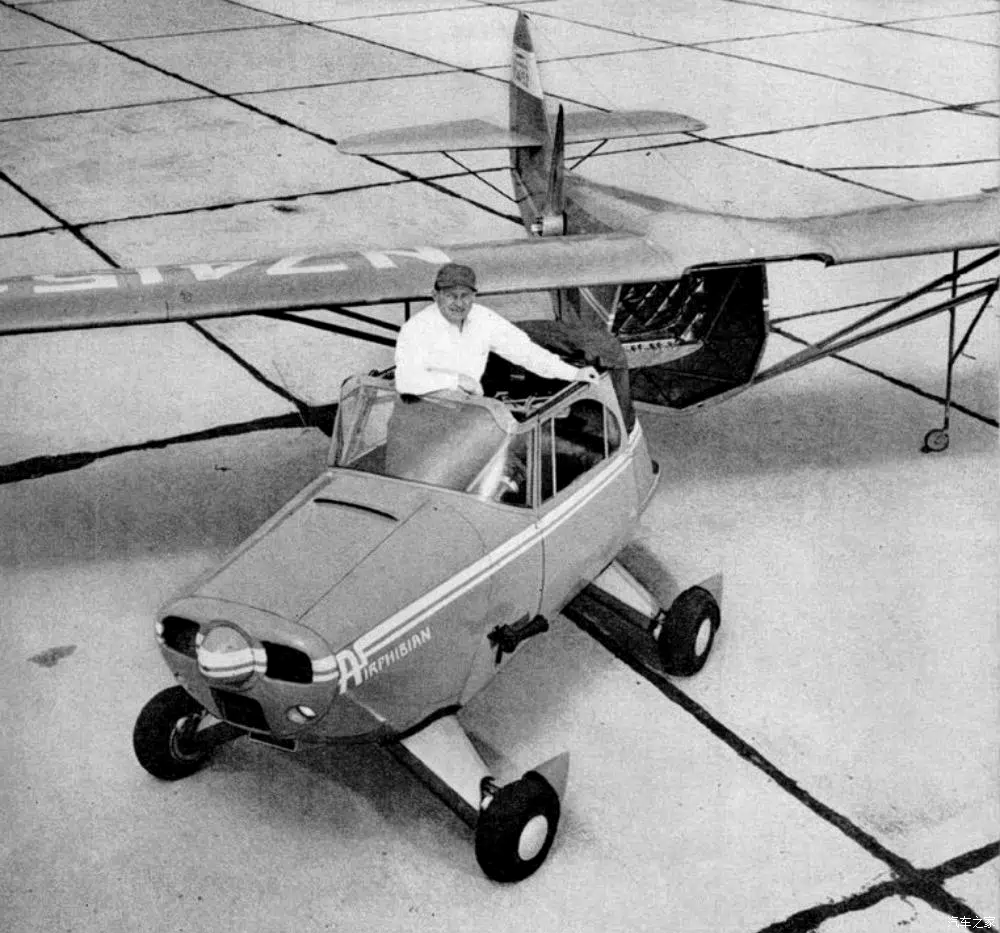
As early as 1917, American engineer Glenn Curtiss built the world's first flying car—though it never actually flew. In 1946, Robert Fulton Jr. designed and test-flew the world's first flying car to receive airworthiness certification.
In 2012, the American company Terrafugia completed the first test flight of its Transition "flying car" prototype.
Coincidentally, the same year, Tesla launched its Model S. Ironically, while Tesla has since become the world's highest-valued automaker, Terrafugia has yet to bring any product to market.
Why has the development of flying cars been so challenging? The obstacles are numerous.
First, flying cars must address the issue of endurance. Starting with "e," eVTOLs are essentially electric vehicles. However, they consume significantly more energy than conventional electric cars. Problems such as "short range, low payload, and slow recharging" severely hinder the industry's progress.
Second, they must pass safety tests. Flying cars must withstand aerodynamic forces, gravity, inertial forces, and other loads, while also ensuring durability and impact resistance on the road. Any malfunction could lead to severe accidents both in the air and on the ground. The requirements for fault diagnosis, safety redundancy, and active and passive protection and rescue are exponentially higher than those for conventional cars.
Additionally, regulations are an unavoidable topic. As a new type of transportation, flying cars currently lack unified airworthiness certification standards and norms globally.
At the same time, the operation of flying cars involves airspace management and infrastructure issues. They must integrate with existing air traffic management systems, properly plan flight routes, altitudes, and zones to avoid conflicts with other aircraft, and prevent privacy breaches and information leaks. After all, we can't have people easily flying outside competitors' windows to steal trade secrets or peeping into someone's bathroom.
Flying cars also require both physical and information infrastructure support. Manufacturers need to collaborate with partners and local governments to plan takeoff and landing points, frequencies, and address issues such as aircraft scheduling, localized business management, and dispatch center construction.
As Guo Peng, Vice President of EHang, pointed out, without landing points, scheduling systems, and an operational ecosystem, flying cars are merely "exhibits."
Finally, we must consider the issue of "money."
Flying cars are currently a "toy for the wealthy." The ¥2 million price tag of Xpeng Huitian's "Land Aircraft Carrier" is considered relatively affordable. AE200, developed by Wofer Changkong, a company under Geely after its acquisition of Terrafugia, costs tens of millions per unit, far beyond the reach of the average person.
The difficulty in reducing prices means a limited market. Yet, if prices do drop, losses could be substantial. The "money" problem will remain a significant constraint on the industry's development in the coming years.
The above only scratches the surface of the challenges. A detailed discussion could go on indefinitely.
Why Does China Have a Big Opportunity?
Despite these challenges, Morgan Stanley predicts that the global urban air mobility market will reach $1.5 trillion by 2040, with China potentially capturing 30% of this market.
Why China?
Because the Chinese market possesses significant policy advantages, market advantages, and supply chain advantages.
On the policy front, in March 2024, the "low-altitude economy" was included in the State Council's Government Work Report. In July of the same year, the Third Plenary Session of the 20th Central Committee of the Communist Party of China decided to "develop general aviation and the low-altitude economy."
According to incomplete statistics, in 2024 alone, 31 Chinese provinces (autonomous regions, and municipalities) included the "low-altitude economy" in their government work reports.
The market advantage is even more evident. China not only has a large population but also boasts the world's most densely populated urban clusters and the highest intercity mobility, providing a vast market space and strong development potential for the large-scale commercialization of flying cars.
How is the supply chain advantage reflected?
At the Tianjin Auto Forum held in September, Zheng Jiaxiang, Deputy General Manager of GAC Aion, pointed out that approximately 70%–80% of the flying car supply chain and manufacturing processes can leverage the existing foundation of the new energy and intelligent connected vehicle industries. This includes key areas such as the three core electric systems, thermal management technology, and lightweight technology.
China is the world's largest market for smart electric vehicles. Whether in terms of market size or the number of enterprises, other global markets combined pale in comparison.
Besides Xpeng, Geely, and GAC, a host of other Chinese automakers such as FAW, Changan, Chery, and BYD are also entering the flying car arena. Even CATL, which produces power batteries for cars, is developing batteries for flying cars.
According to He Wei, founder and CEO of Weihang Aerospace, the price of a single motor suitable for flying cars overseas ranges from €100,000 to €150,000, while domestic suppliers have reduced this to just ¥150,000—only one-eighth of the overseas cost.
Furthermore, China's advancements in 5G and BeiDou communication technologies have laid a solid technical foundation for intelligent low-altitude 3D traffic management.
These capabilities position China to potentially become the largest producer and seller of flying cars globally.