.png?w=1555&h=1555)
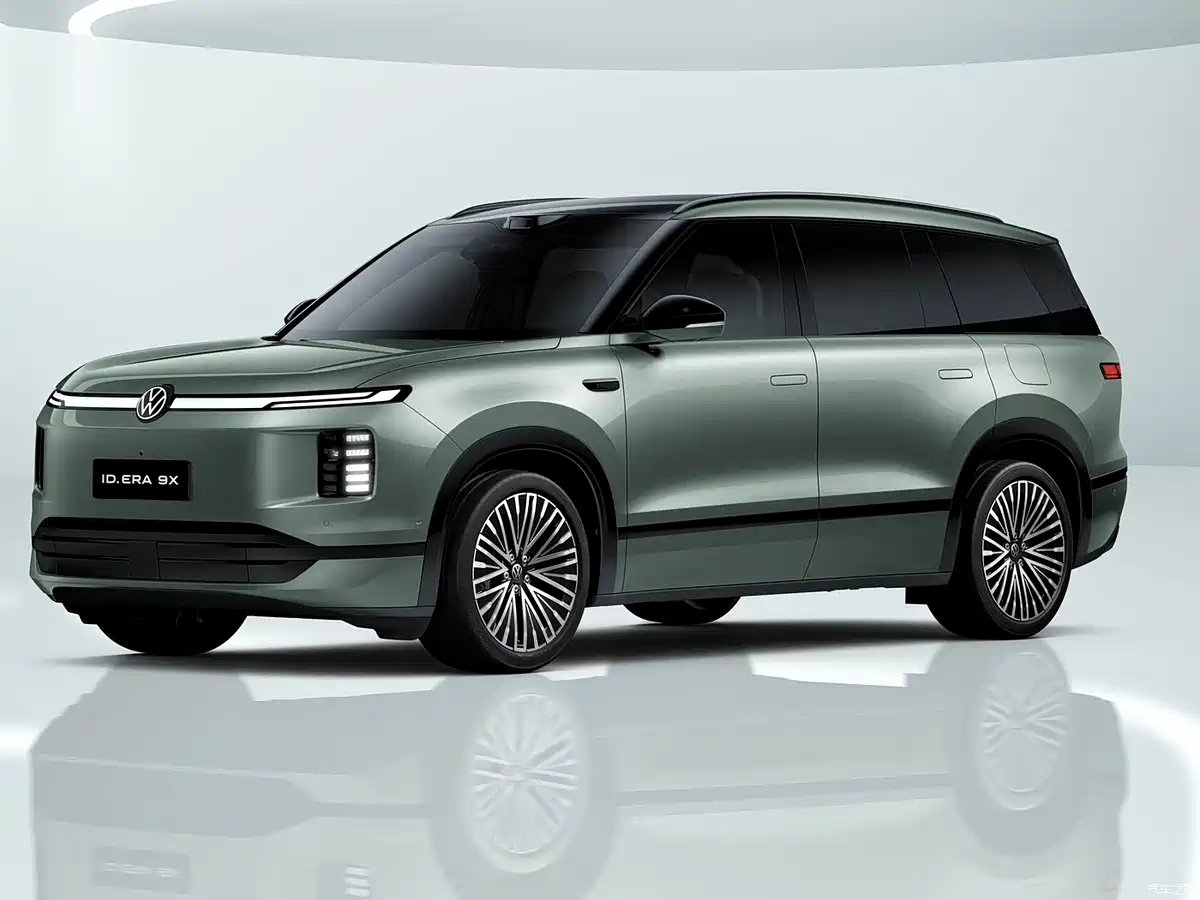
[Auto Home – Industry] Not long ago, Volkswagen sold over 10 million cars a year and sat firmly at the top of global auto sales. Now, it plans to cut 100,000 jobs, shut down four German plants, and slash global production capacity from 12 million to 9 million vehicles annually.
All of this has happened in just seven years.
Many believe Volkswagen is falling from its pedestal – layoffs and plant closures are clear signs of decline, right?
But I might throw some cold water on that idea. This bold move by Volkswagen is not a sign of failure; rather, it's a "scrape-the-toxin-off-the-bone" restructuring, and quite possibly a "hibernation" phase before its next leap forward.
Volkswagen's Crisis
To understand why VW is planning layoffs and plant closures in Germany, we first need to grasp the true nature of its current crisis.
If you only look at Volkswagen's revenue, it's hard to understand why it needs to cut jobs. After all, over the past three years, VW's revenue has remained stable at around €320 billion, with no major fluctuations.
But if you look at net profit, you'll be shocked. In 2023, VW earned €16 billion. By 2024, that fell to €10.7 billion, a 33% year-on-year decline. By 2025, profits shrank further to just €6.7 billion, another 38% drop.
And it doesn't stop there. In the first quarter of this year, the same story continued: revenue edged down slightly while net profit dropped another 30%.
So Volkswagen's biggest problem right now is not that it can't sell cars – it's that the money it keeps in its pocket is shrinking.
Three Battlefields, Three Crises
Let's break it down by region. Volkswagen's revenue is heavily concentrated in its home ground – Europe, which accounts for 64% of total revenue. North America comes second at 19%, and the Asia-Pacific region ranks third at 12%.
First, Europe. Revenue over the past four years has been steadily rising.
Europe's biggest issue is high costs. This year, aided by high oil prices, Chinese automakers have forcefully breached the European market. In May this year, Chinese automotive brands captured nearly 12% of the overall European car market share.
So Volkswagen's dilemma at home is this: production costs cannot be reduced, while competitors are rapidly capturing market share with price advantages.
North America's problem is more straightforward – tariffs. In April 2025, the U.S. imposed an additional 25% tariff on imported vehicles, bringing the total tariff burden on European passenger cars to 27.5%. This directly cost Volkswagen about €3 billion in lost profits.
Finally, the Asia-Pacific market – essentially China – where Volkswagen is bleeding the most. In 2022, VW's Asia-Pacific revenue was €51.4 billion; by 2025, it had dropped to just €38.2 billion. The problem in China is clear: in the mass-market segment, BYD is a formidable rival; in the premium segment, AITO, Li Auto, and NIO are applying pressure. Models like the Lavida and Sagitar, which once sold tens of thousands per month, are gradually being pushed out of the sales charts by new-energy vehicles.
So, looking at the bigger picture, if Volkswagen wants to defend its dominant position, its top priority is to reduce costs – at least to hold its ground in Europe and compete head‑to‑head with Chinese automakers.
With that context, Volkswagen's layoffs and plant closures in Germany become easier to understand – they are fundamentally about cutting costs.
Volkswagen's Strategic Challenge
Volkswagen's past success formula was clear: design and engineer in Germany, build to German standards, then replicate this proven formula globally. This "Made in Germany, sold worldwide" approach dominated the fuel‑vehicle era for decades.
Later, in response to the Chinese market, VW adopted the strategic slogan "In China, for China" – localizing production and adapting products for Chinese consumers, while R&D and core technology remained German‑led.
Now, Volkswagen is taking its logic one step further: "In China, for the World." The core idea is to turn China into a new global R&D and cost center.
In 2026, VW plans to launch more than 20 new-energy models in China – roughly one new car every two weeks – matching the product cadence of Chinese startups. The calculation behind this is clear: use China's supply chain and talent to aggressively drive down manufacturing costs. Validate products in the Chinese market, then roll them out to Europe and North America, leveraging cost structures and product competitiveness proven in China to capture global market share.
Of course, turning a giant ship is no easy feat. To cut 100,000 jobs in Germany, the biggest obstacle is resistance from labor unions.
So, as you can see, layoffs affect 100,000 individuals, and behind them, 100,000 families. Add the suppliers and businesses dependent on VW's supply chain, and that could mean hundreds of thousands more families.
There's no denying that Volkswagen is at a critical juncture. If it can lower costs now and protect profits, it may survive the industry shakeout. If costs cannot be reduced, and competitors overtake it, the pressure will only intensify.
Do you think Volkswagen will make a comeback?